Callback prompt after escalation
Background & context
Meta's support ecosystem serves billions of users worldwide. However, a specific group, such as paid Facebook users including advertisers, has access to live support through Messenger. These users often seek help with issues related to billing, ad delivery, and account access.
Data indicated a significant drop-off during the waiting period between the initial contact and when an agent became available. Many users either abandoned the chat or opened duplicate cases, which increased the operational workload and delayed resolution times.
The problem
Meta’s data showed that phone support consistently outperformed chat and email in key areas such as first-contact resolution, user satisfaction, and time to closure.
The current Messenger support flow does not proactively offer phone support as a follow-up option. Users are required to manually request a call, and agents must evaluate cases before escalating them. This process creates unnecessary friction and leads to missed opportunities for efficiently resolving high-impact cases.
How can we effectively connect users in chat with the appropriate phone agent at the right moment, without disrupting the self-service experience?
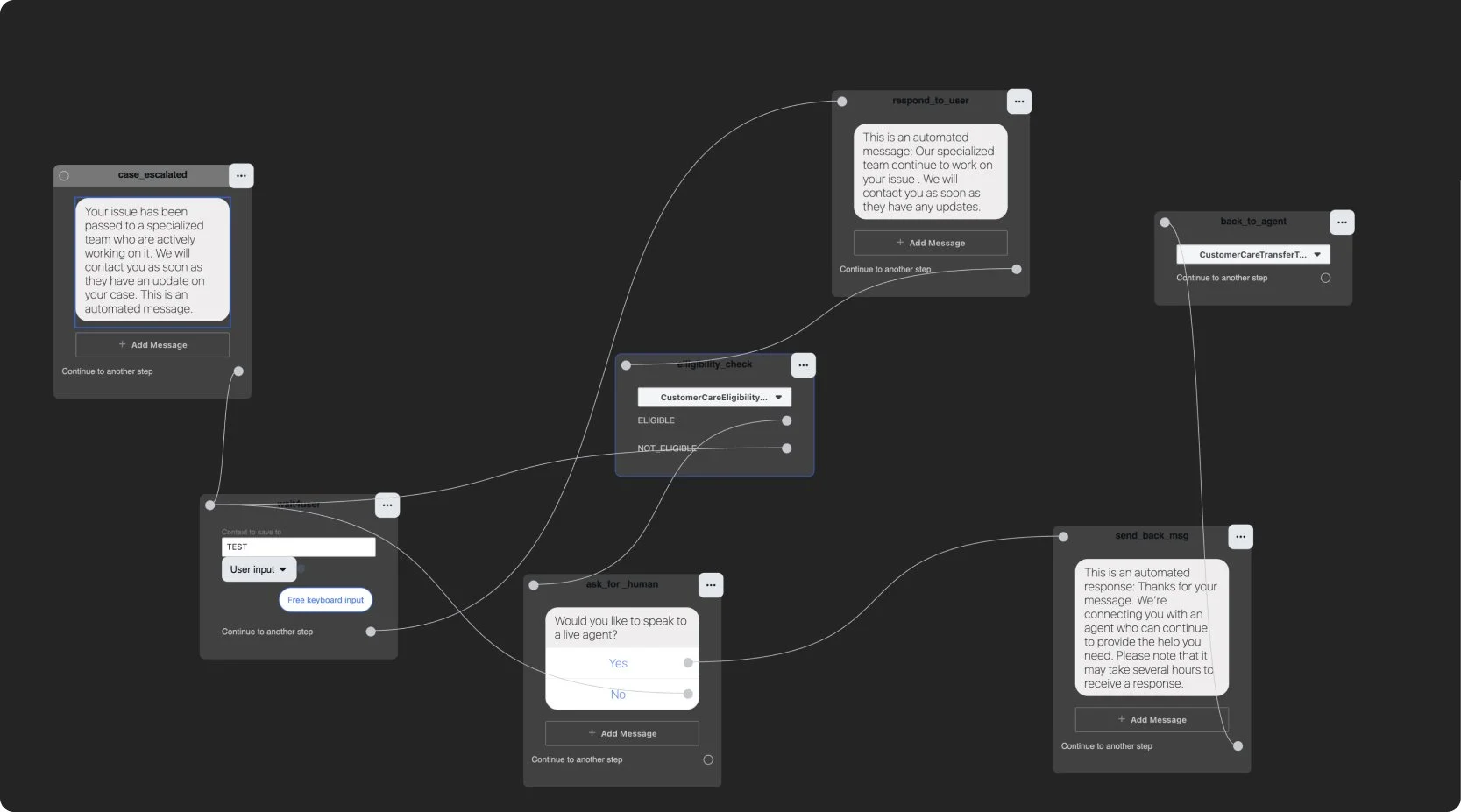
The current flow - notice no call back prompt
My role
I worked end-to-end on the project, from framing the problem to designing and validating the solution:
Defined the content strategy and interaction model for integrating phone escalation within Messenger support flows.
Partnered with product design, engineering, and data science to prototype the end-to-end user journey in Figma, ensuring clarity from content to logic.
Wrote and tested conversational content that guided users from chatbot to live phone support with minimal confusion or drop-off.
Collaborated with the AI and internationalisation teams to ensure the flow scaled across 20+ languages and adhered to cultural norms for phone communication.
The solution
We designed an AI-led escalation flow that automatically identifies when a case is better handled over the phone and proactively prompts the user with a simple, high-trust message:
“Your issue has been passed to a specialised team who are actively working on it. We’ll contact you as soon as they have an update on your case.
Or enter your phone number, including country code, to receive a call when your case is updated.”
This flow:
Reduced uncertainty by setting expectations.
Used plain language to build trust.
Maintained continuity by linking the call outcome back into Messenger, keeping all case notes in the same ecosystem.
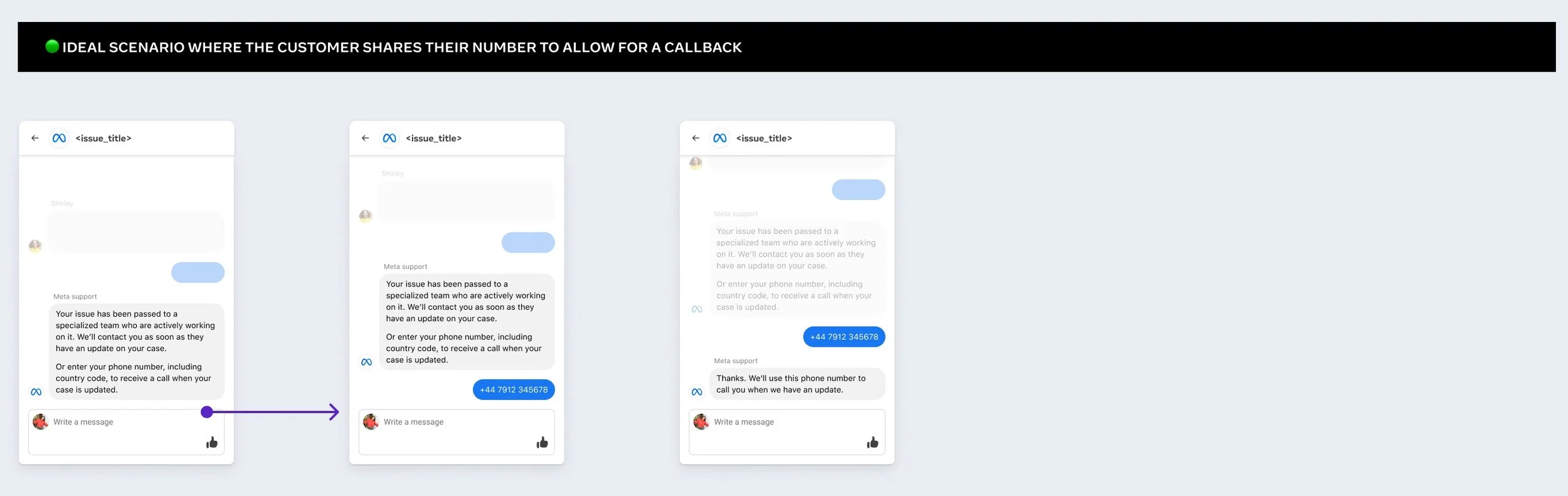
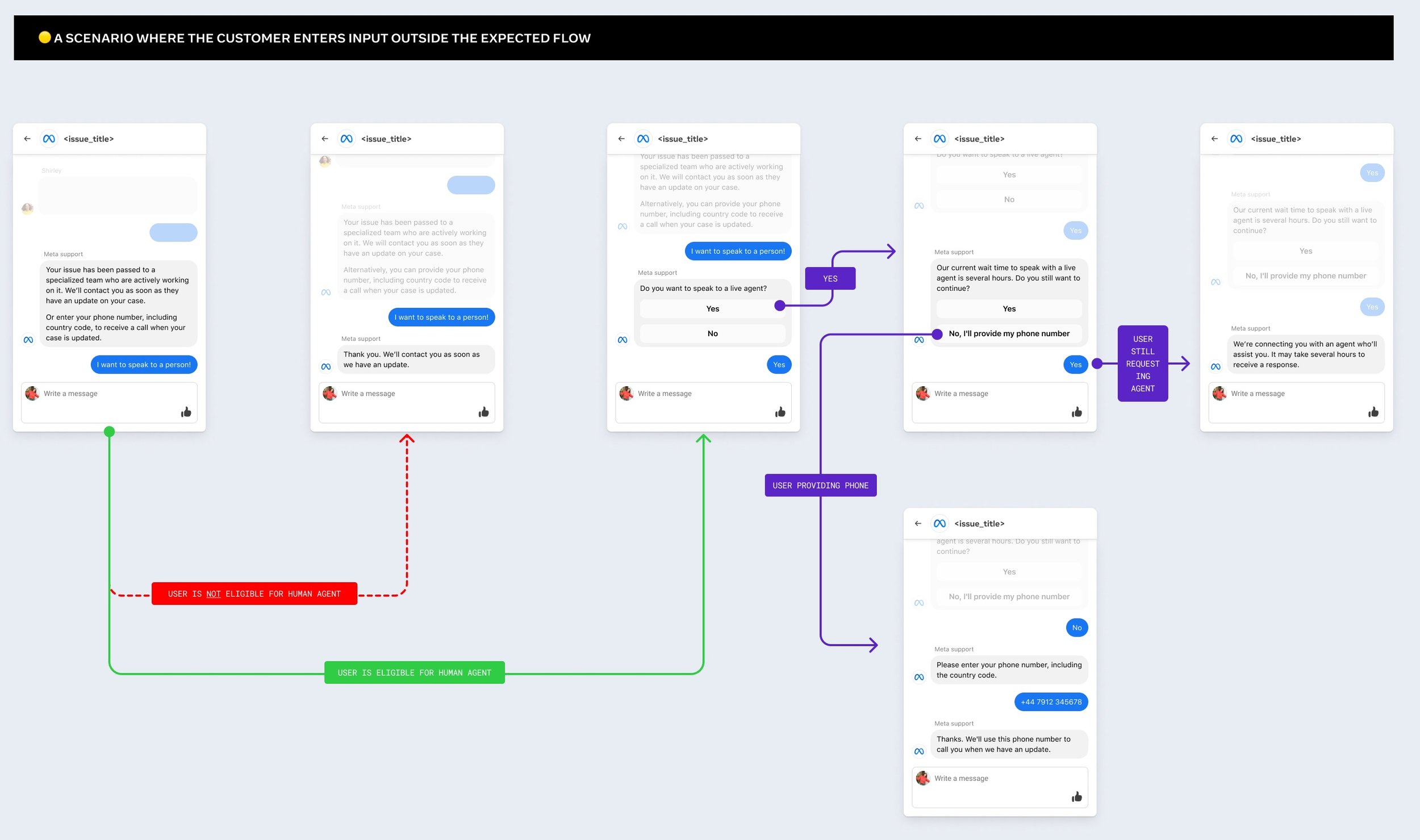
How did we arrive at the solution?
Journey mapping: The designer, researcher, and I mapped the advertiser support journey end-to-end to pinpoint friction points between AI, live chat, and phone. Drop-off data and qualitative insights from support agents confirmed that uncertainty during the “waiting” period was the main driver of attrition.
Feedback: I brought the designs to our content design-specific feedback sessions, where my peers gave constructive feedback. The designer also received design-specific feedback on their designs through feedback crits.
Cross-functional alignment: I partnered with engineering to define content-to-logic mapping, ensuring message triggers aligned with system capabilities (e.g., agent availability, case priority). I also contributed patterns to Meta’s Support Content Framework, ensuring the approach could scale across surfaces.
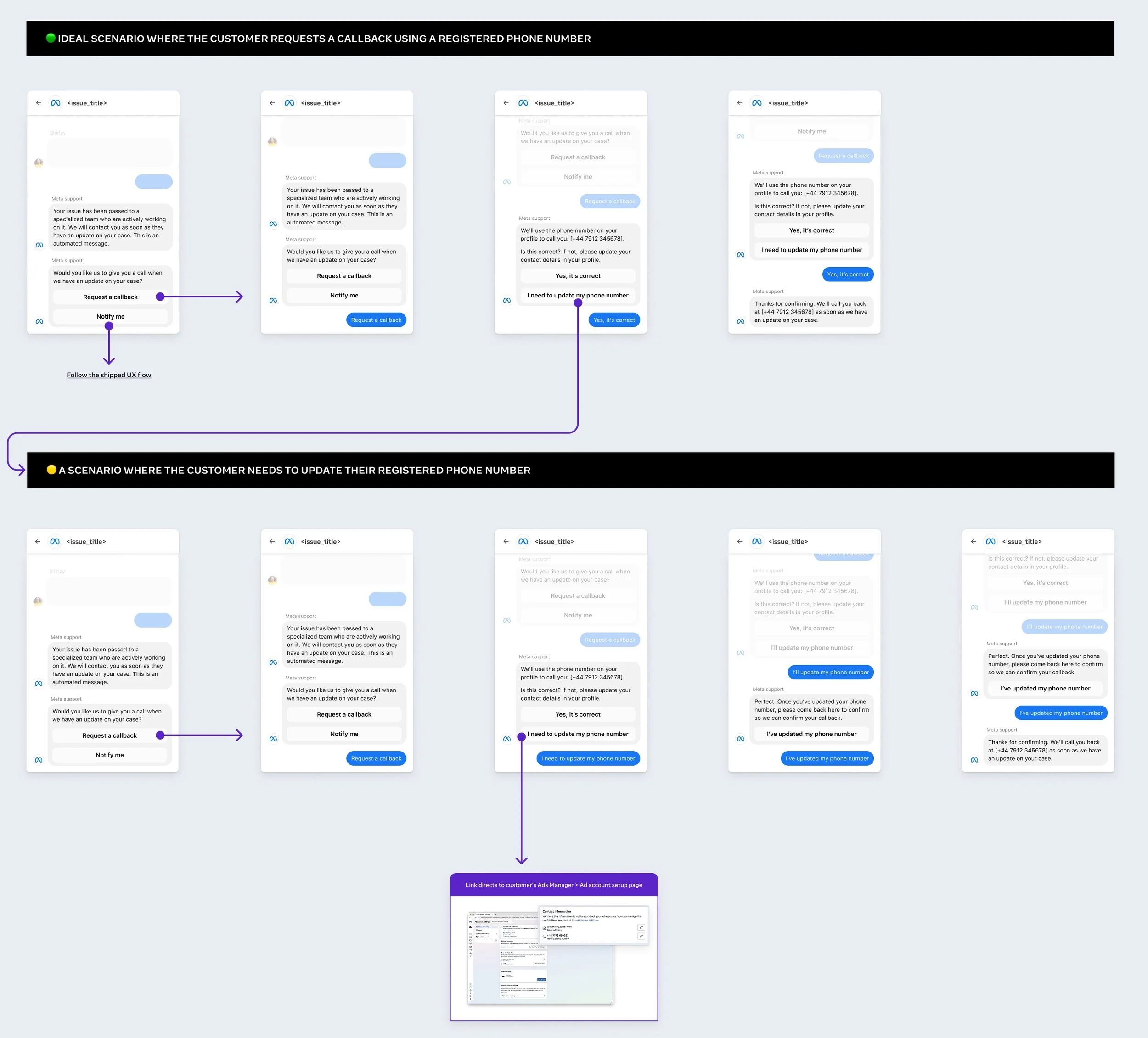
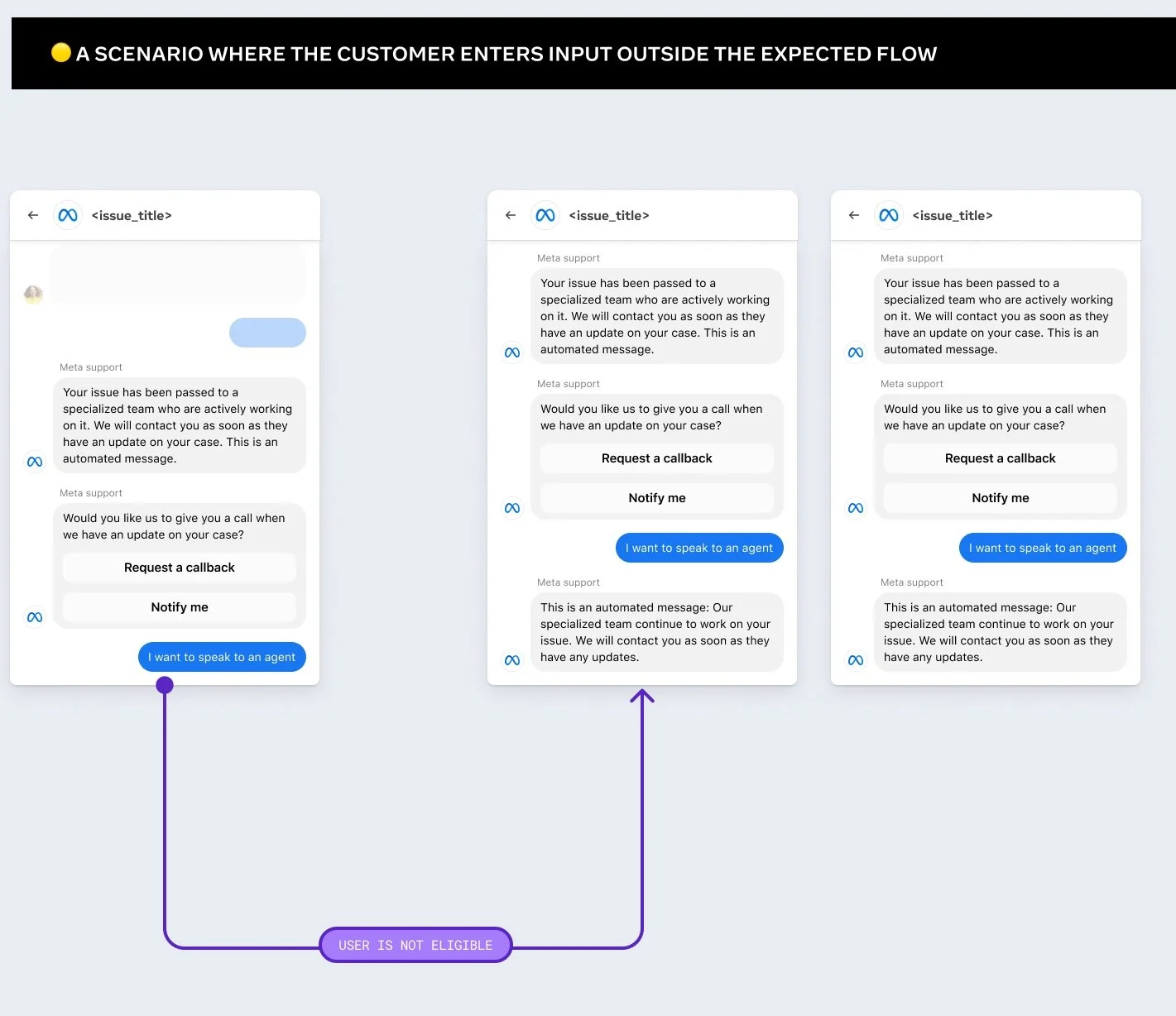
One initial idea was to use the user's saved phone number in their account. This led to more complex flows incase the user needed to updated their saved number.
What challenges did I face?
Balancing automation with empathy was crucial, as early iterations sounded too robotic and undermined user trust. I needed to find the right tone: confident yet human, aligning with Meta’s Messenger Style Guide.
Technical constraints posed challenges, as the flow had to work seamlessly across Messenger, mobile web, and internal support tools. This required close coordination with engineering to ensure that logic-driven messaging remained intact, even when user states changed or when users responded unexpectedly.
The complexity of localisation was another important factor. The phrasing around “calls” and “support” varied significantly across different markets. I collaborated closely with the internationalisation team to ensure clarity and cultural sensitivity in over 20 languages, particularly in cases where "unsolicited calls" raised privacy concerns.
What was the impact?
32% reduction in drop-off during agent wait periods.
18% increase in higher user satisfaction for cases that transitioned to phone support.
What did I learn?
The smallest message can reshape the system: A single, well-designed prompt can dramatically alter user behaviour.
Clarity and timing are as critical as tone: When users are frustrated or uncertain, cognitive load increases.
AI doesn’t replace human support: The goal isn’t full automation; it’s a smart triage that meets users where they are.